What it is
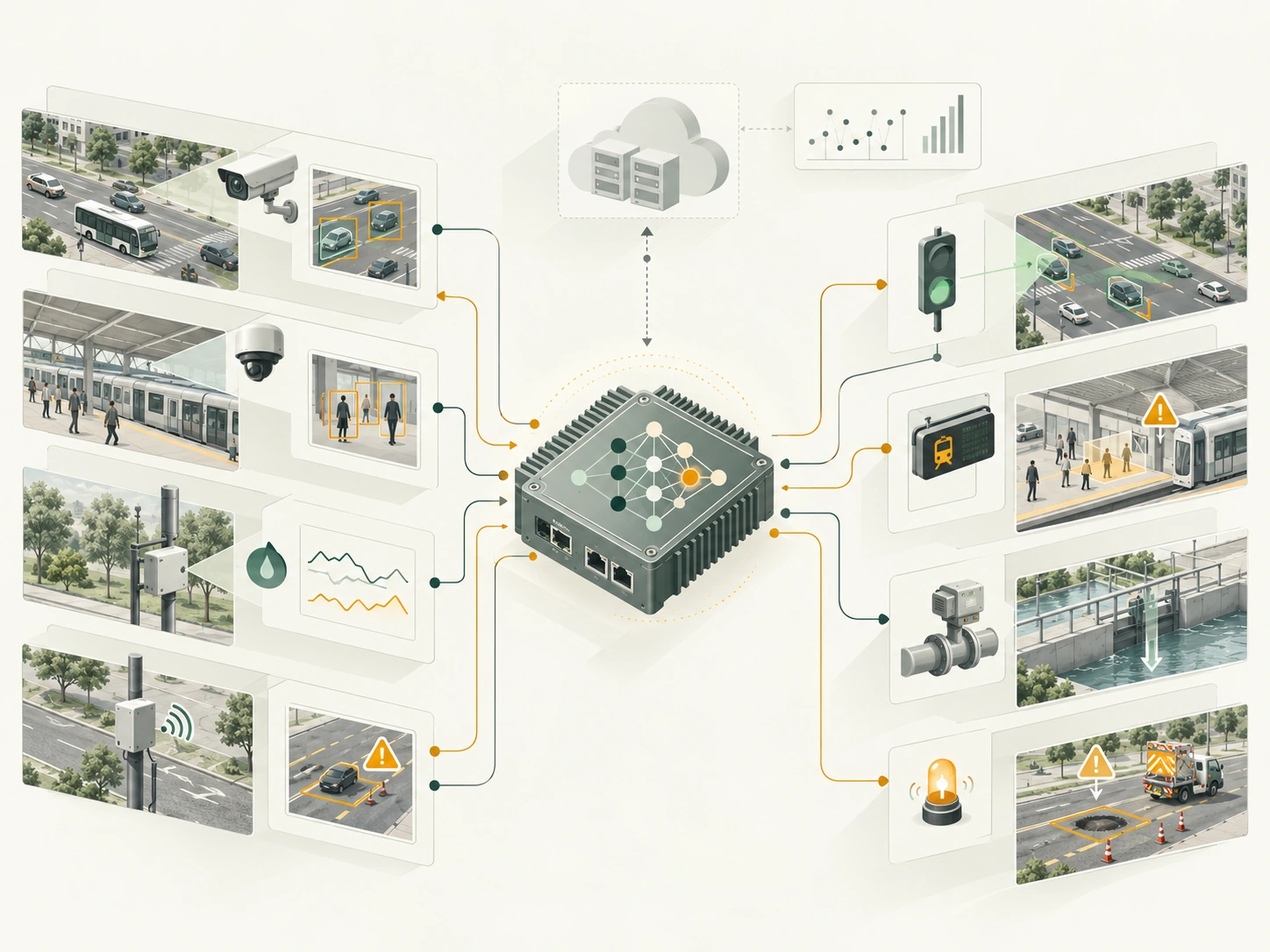
Edge AI runs machine-learning inference on or near the device producing data, such as a camera gateway, vehicle, or building controller. It can reduce latency or limit transmission of raw data. Local inference still needs security, calibration, representative evaluation, and a process to manage model versions across deployed devices.
How it works
- 01Select a task where local processing has a measurable operational or privacy benefit.
- 02Choose a device and model that meet power, memory, latency, and maintenance constraints.
- 03Test in real environments, including connectivity loss and sensor variation.
- 04Deploy signed updates, monitor drift and device health, and provide a safe fallback.
- 01
Select a task where local processing has a measurable operational or privacy benefit.
- 02
Choose a device and model that meet power, memory, latency, and maintenance constraints.
- 03
Test in real environments, including connectivity loss and sensor variation.
- 04
Deploy signed updates, monitor drift and device health, and provide a safe fallback.
Why it matters
Edge processing may keep some data local and provide faster alerts, but it distributes models across many devices. Cities must manage lifecycle, security, and failure behavior for the full device fleet.
Typical Smart City applications
- Local traffic or pedestrian counting
- Building equipment fault alerts
- Environmental sensor anomaly screening
- Onboard mobility perception
Example data inputs
Strengths
- Can reduce network traffic and response delay
- Can support operation through intermittent connectivity
- Can process selected data locally instead of centralizing raw feeds
Limitations and risks
- Many devices increase patching and inventory burden.
- Models may drift across hardware and local conditions.
- Local inference does not remove privacy or safety duties.
Illustrative workflow
Applied city example
A district gateway estimates hourly pedestrian counts from a camera feed, retains only aggregates, and reports a health signal. Staff compare sampled counts with manual observations and can disable inference if calibration drifts.
Related methods
- Computer vision
- Anomaly detection
- Classification algorithms
- Supervised learning
Frequently asked questions
Does local inference make video anonymous?
Not necessarily. Images can still identify people, and derived data may remain sensitive.
How are edge models updated safely?
Use controlled, authenticated updates, staged rollout, monitoring, rollback, and a documented owner.
Is edge AI always faster?
Latency depends on the device, network, model, and task and should be measured in deployment conditions.