Fixed-time LED
Conventional LED streetlights operate continuously at full output, regardless of nearby road users. This is the experiment's benchmark.
SMART CITY LAB · SMART STREETLIGHTING
Explore how conventional full-output LEDs, independent local sensors, and network-coordinated adaptive controls respond to the same seeded mix of vehicles, cyclists, and pedestrians. Tune demand, sensor behavior, response times, and electricity tariffs to compare modeled energy use, lighting coverage, and operating costs.
Explore Simulation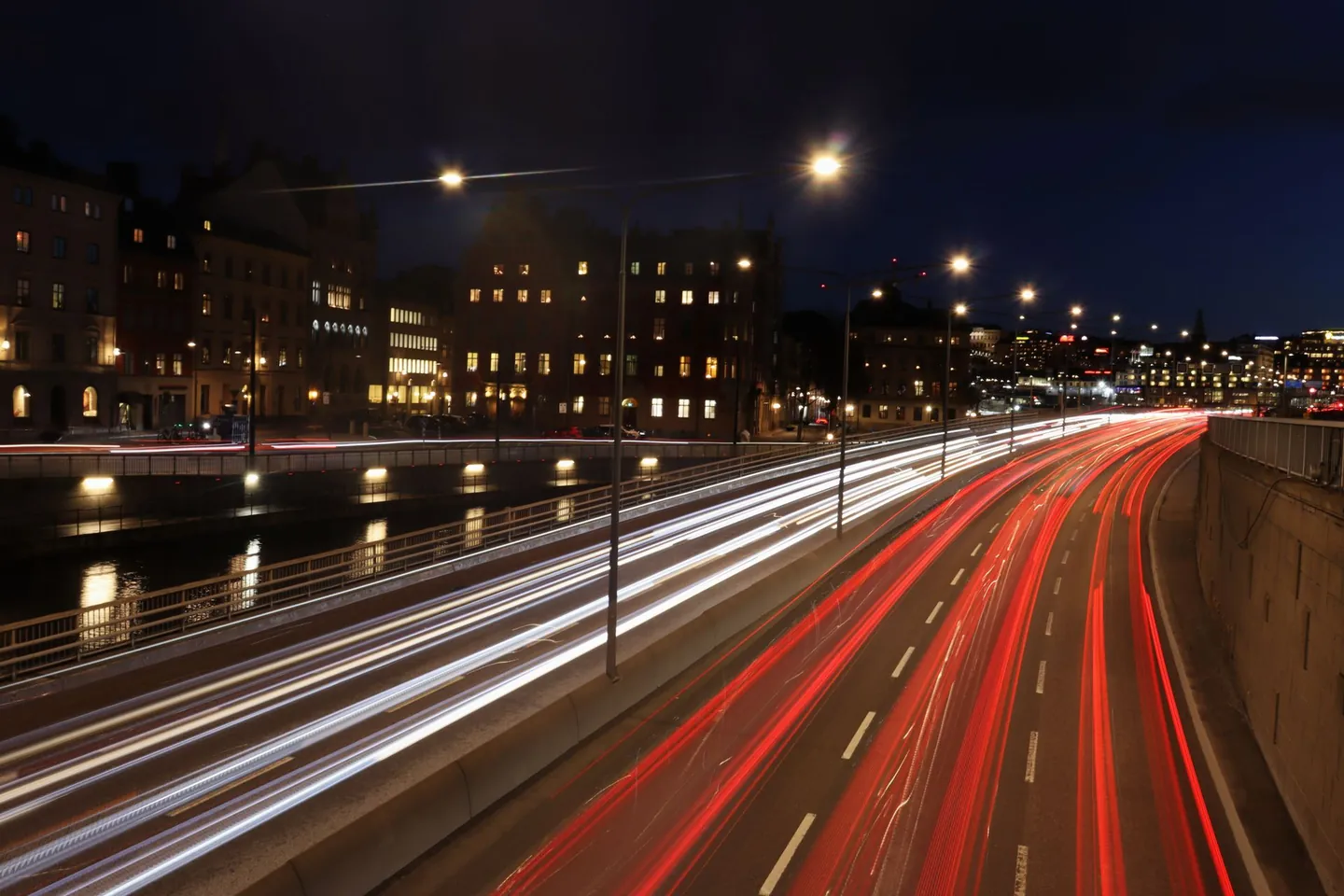
Compare energy use and estimated savings as you change traffic demand, sensor settings, response delays, road-user lighting coverage, and electricity costs. All three approaches receive the same reproducible seeded arrivals.
This is an educational simulation. It reports modeled estimates, not validated roadway-lighting designs or proof of actual road safety.
Conventional LED streetlights operate continuously at full output, regardless of nearby road users. This is the experiment's benchmark.
Each streetlight detects nearby road users and independently adjusts its brightness in response.
Network-coordinated streetlights anticipate approaching road users and adjust illumination proactively.
SCD · SMART CITY LAB
One bounded server calculation per experiment; playback runs locally from returned frames.
Ready · v0.9.12 modelInterpretation: Results are modeled estimates for an illustrative 600-meter street. Illumination values are commanded output, not measured lux or regulatory compliance. Road-user coverage thresholds are illustrative and do not demonstrate real-world safety.
Get Smart City Dispatch Weekly — original editorial perspectives and the week's most important developments.
Confirm your email to subscribe. Unsubscribe anytime.
Privacy Policy