What it is
Natural language processing (NLP) applies computational methods to text or speech. It can classify service requests, extract structured details, translate, summarize, or search records. City records often include personal and sensitive information, so a useful workflow minimizes data, protects access, and allows residents or staff to correct errors.
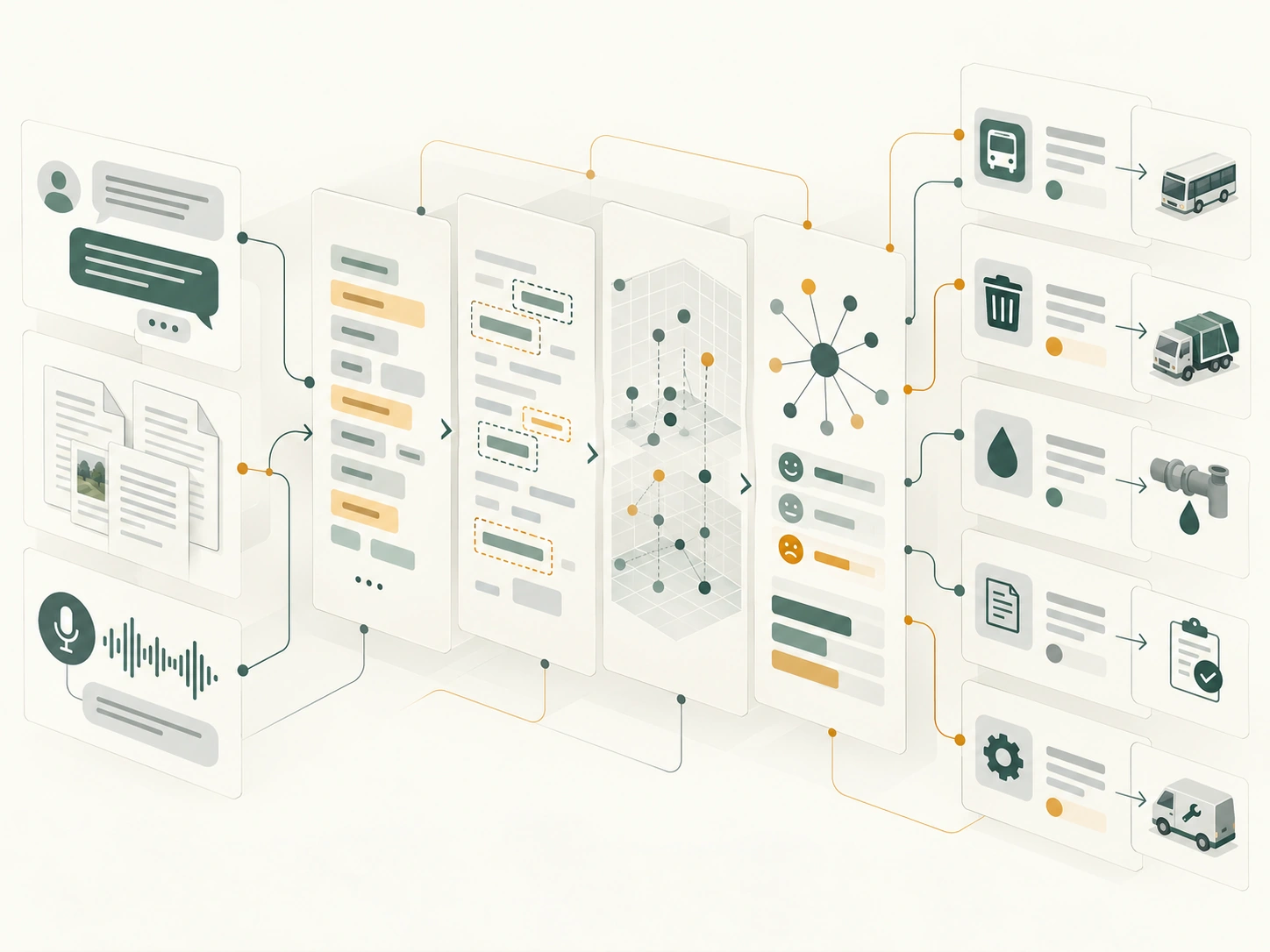
How it works
- 01Define a task such as translation, topic classification, or information retrieval.
- 02Set language coverage, privacy rules, consent, retention, and human-review points.
- 03Evaluate with representative examples, including dialects and accessibility needs.
- 04Monitor error types and maintain a clear channel for corrected records or human assistance.
- 01
Define a task such as translation, topic classification, or information retrieval.
- 02
Set language coverage, privacy rules, consent, retention, and human-review points.
- 03
Evaluate with representative examples, including dialects and accessibility needs.
- 04
Monitor error types and maintain a clear channel for corrected records or human assistance.
Why it matters
Language tools can help staff navigate high-volume requests and improve access across languages. They can also misunderstand context, names, or urgency, so consequential service decisions should not rely on unreviewed text predictions.
Typical Smart City applications
- Sorting service requests
- Searching planning and policy documents
- Drafting multilingual service information for review
- Summarizing public comments with provenance
Example data inputs
Strengths
- Can organize large text collections for human review
- Can improve search and translation workflows
- Supports consistent handling of repeated administrative language
Limitations and risks
- Meaning, tone, and local language vary across communities.
- Sensitive text can be exposed through collection, training, or logs.
- Summaries may omit dissenting or minority views and require source traceability.
Illustrative workflow
Applied city example
A 311 office uses NLP to suggest a service category and language for incoming requests. Staff can override the suggestion, and the city audits correction rates across languages before increasing automation.
Related methods
- Classification algorithms
- Large language models
- Retrieval-augmented generation
- AI agents
Frequently asked questions
Can NLP translate every city notice accurately?
No. Important legal, safety, and eligibility information needs qualified review and accessible alternatives.
Should public comments be summarized automatically?
Summaries can support review but should preserve links to original comments and disclose methods and omissions.
Can a city use text records without privacy review?
No. Purpose, legal basis, access, retention, and personal information should be assessed first.