Background and Further Context
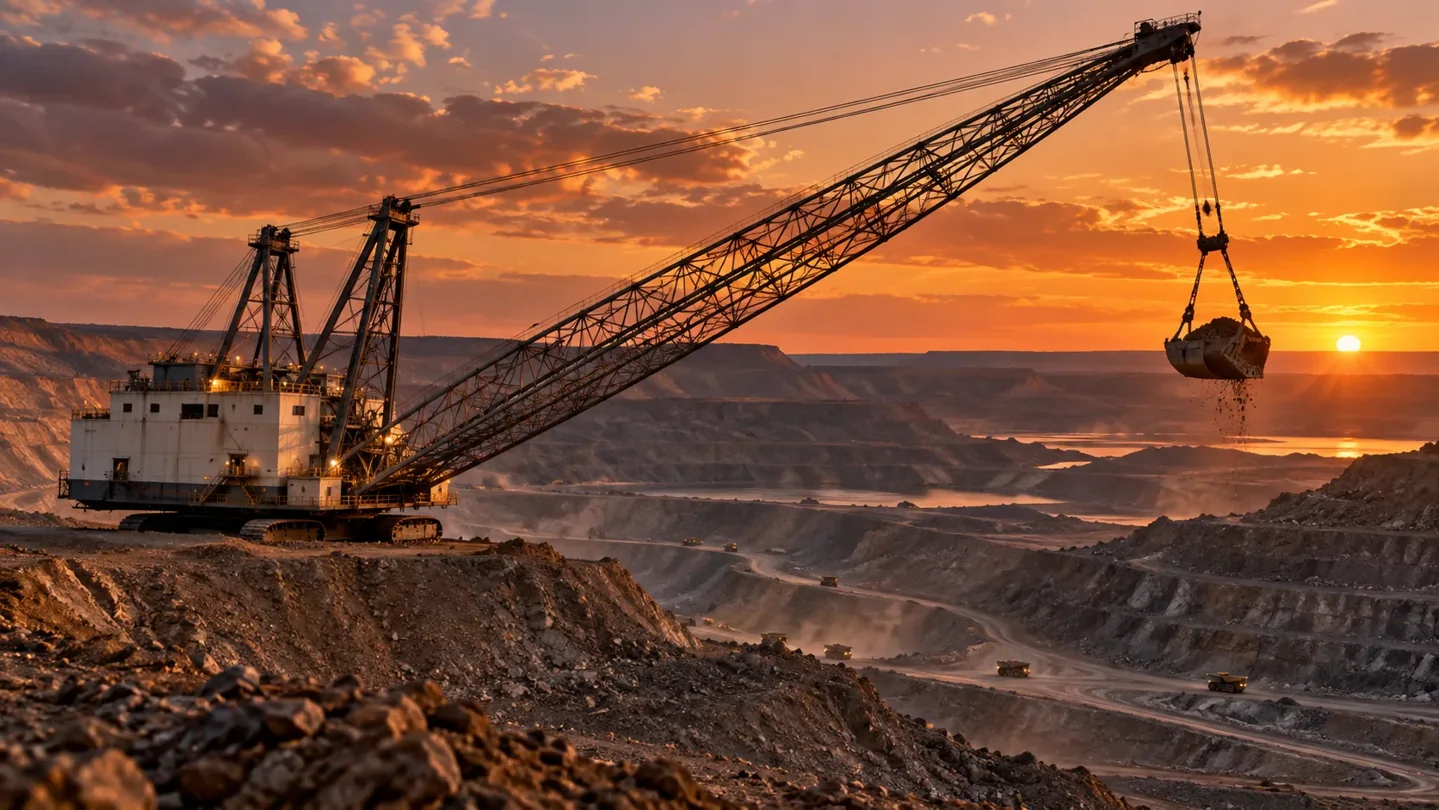
Dragline excavation grew from cable-operated earthmoving in the early twentieth century, when mines and major civil works sought ways to move material over long distances without carrying every bucket away in a truck. In a large surface mine, the machine's boom reaches across a considerable area. Once the bucket fills, the operator hoists and swings it to place the excavated overburden beyond the working cut. The largest draglines move slowly by stepping on large walking mechanisms; repositioning is an operation in itself.
Modern upgrades often concern instrumentation rather than wholesale autonomy. Position sensing can help operators place buckets more consistently; strain and vibration measurements may reveal structural fatigue; and digital terrain models can support excavation planning. Because these machines may work for decades, better diagnostic systems and careful refurbishment can matter more than buying new equipment.
The connection to modern cities needs to be described precisely. Many large draglines work in coal operations, historically linked to electricity generation and industrial growth. Coal is not a critical battery mineral, and increased coal extraction should not be presented as an advance in clean urban technology. Some cable-operated excavators have broader large-scale earthmoving uses, but the great walking draglines depicted in mining photographs primarily tell a story about energy systems, industrial history, land disturbance, and the transition away from high-emission power.
For city policymakers, that history is relevant. The machinery behind yesterday's power supply shaped landscapes and communities far from the buildings where electricity was consumed. Future work may emphasize safe life-extension where equipment remains in use, efficient power systems, better reclamation, and eventual mine closure. Smart cities should examine both the technology they deploy and the environmental legacy of the resources that supported it.
How the system fits together
Hoist, drag, and swing
Electric drives control ropes that lower, pull, lift, and reposition a bucket. The operator coordinates the cycle with ground conditions and spoil placement.
Excavation planning
Mine geometry, boom reach, spoil stability, and stripping sequence determine whether the machine can work effectively.
Long-lived asset management
Maintenance teams inspect ropes, structures, bearings, motors, and fatigue-prone connections throughout the machine's working life.
- 01
Hoist, drag, and swing
- 02
Excavation planning
- 03
Long-lived asset management
Why cities should care
- Resource extraction has shaped urban electrification and industrial development, often with environmental impacts far from cities.
- The machine illustrates the size and complexity of the infrastructure hidden behind energy supply.
- Predictive maintenance and structural digital twins can improve safety for long-lived industrial assets.
- Responsible energy transitions must address reclamation, worker communities, and environmental legacies.
Data and AI applications
- Structural strain, vibration, and fatigue monitoring
- Digital-twin simulation of digging paths and spoil placement
- Planned maintenance for ropes, drives, bearings, and boom structures
- Production-cycle monitoring with operator oversight
Example in practice
A long-running surface mine uses strain sensors and maintenance records to assess fatigue in a dragline boom, while regulators and mine engineers review the rehabilitation plan for disturbed land. This is an illustrative scenario; it does not identify a specific mine.
What Are the Benefits and Limitations?
The applications above describe what a system may support. Actual benefits depend on the operating context and should be measured against a clear baseline.
Limits and risks
- Commonly tied to carbon-intensive coal extraction rather than clean-energy mineral production
- Large land disturbance and mine-reclamation requirements
- Very high capital cost and limited mobility
- Operational safety, electrical supply, fatigue, and long-term maintenance challenges
Sources & References
Related infrastructure machines and robotics
- Tunnel boring machines for urban infrastructure
- Bulldozers and intelligent earthmoving
- Motor graders and precision road construction
- Wheel loaders in urban infrastructure work
- Autonomous mobile robots for urban facilities
- Industrial robot arms and infrastructure fabrication
- Ultra-class mining haul trucks: moving the materials behind cities
- Electric rope shovels: supplying the materials of modern cities
- Hydraulic mining excavators and the urban materials supply chain