Background and Further Context
The evolution of wheel loaders followed the growth of mechanized construction and the increasing use of hydraulic lifting equipment. Early loaders gave tractors a way to fill trucks and move loose materials. Purpose-built articulated machines later became more maneuverable and productive, with stronger hydraulics, larger buckets, and better operator visibility. Modern loaders add onboard weighing, electronic controls, cameras, and connections to fleet-management software.
Today's technology can help operators load trucks more consistently and reduce wasted travel. Onboard payload systems estimate how much material is in the bucket. Cameras, radar, and detection systems can improve awareness of people and obstacles, especially when a vehicle is reversing. Connected machines report hours, faults, idle time, and fuel use. These measurements are useful for fleet managers, but none removes the need for a traffic plan, trained staff, or clear pedestrian separation.
Future loaders may use more assisted digging, automatic return-to-position functions, and better object recognition. Battery-electric equipment could be attractive for certain municipal and indoor applications where local emissions and noise are concerns, subject to charging access and working hours. The economic question is whether these features improve material flow, safety, and measured cost—not whether every loading action can be automated.
How the system fits together
Loading system
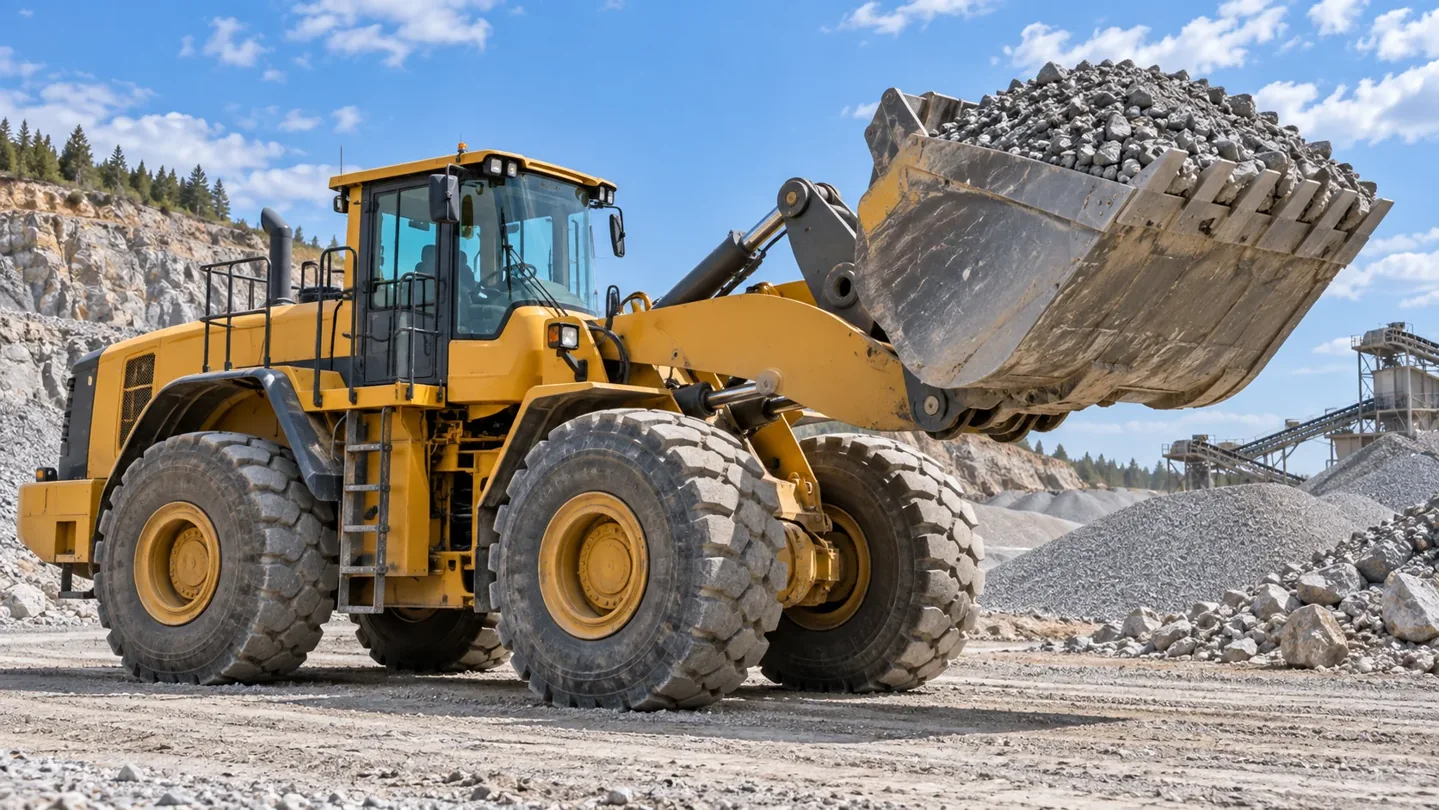
A front bucket, forks, or specialized attachment moves material while hydraulics coordinate lift, tilt, and dumping.
Vehicle and operator systems
Articulated steering and traction systems provide maneuverability. Cameras, proximity sensing, and controls help operators navigate a work zone.
Material and fleet records
Payload readings, work orders, haul-truck trips, and maintenance records connect equipment activity with project progress.
- 01
Loading system
- 02
Vehicle and operator systems
- 03
Material and fleet records
Where It Is Used
- Roadworks and civil construction material handling
- Utility excavation and site backfilling support
- Public-works depots, recycling facilities, and aggregates yards
- Snow, debris, and emergency cleanup with suitable attachments
Data generated
- Estimated bucket loads, cycle times, and material movements
- Fuel or energy use, idle time, machine hours, and fault codes
- Location and equipment utilization
- Safety observations and maintenance records
Analytics and AI applications
- Payload tracking and overloading prevention
- Cycle optimization, idle reduction, and utilization analysis
- Machine-health and maintenance analytics
- Camera-based proximity awareness and assisted loading
Example in practice
A municipal public-works depot uses loaders to prepare winter road-treatment materials. Supervisors compare loader and truck records with inventory movements and maintenance costs. The program seeks fewer unnecessary trips and safer loading rather than simply maximizing bucket size. This is an illustrative workflow, not a claimed deployment.
From the Company Atlas
Documented projects and applications
These examples are linked to this guide because their documented scope relates to the technology. Status and outcomes are described by the cited source; vendor-reported results are not independent evaluations.
Electric deconstruction site
- Location
- Siemens Technology Campus, Erlangen, Germany
- Customer / owner
- Siemens campus project with Volvo CE and Volvo Trucks
- Technology
- Electric excavators and loaders, demolition, crushing and material transport
- Status
- Customer project in 2025; described as an all-electric deconstruction site
What Are the Benefits and Limitations?
The applications above describe what a system may support. Actual benefits depend on the operating context and should be measured against a clear baseline.
Limits and risks
- Blind spots, reversing, and vehicle–pedestrian conflicts remain serious hazards.
- Payload estimates can drift and do not replace certified weighing where required.
- High idling and short repetitive cycles can increase fuel use and emissions.
- Large quarry-sized machines are not necessarily suitable for constrained urban sites.
Design considerations
Select attachments and capacities for the required work, and separate machines from pedestrians and public traffic. For monitored loading, confirm how payload estimates are calibrated and how inventories are reconciled.
Sources & References
Related infrastructure machines and robotics
- Tunnel boring machines for urban infrastructure
- Bulldozers and intelligent earthmoving
- Motor graders and precision road construction
- Autonomous mobile robots for urban facilities
- Industrial robot arms and infrastructure fabrication
- Ultra-class mining haul trucks: moving the materials behind cities
- Electric rope shovels: supplying the materials of modern cities
- Hydraulic mining excavators and the urban materials supply chain
- Dragline excavators: the giant machines behind resource extraction