Background and Further Context
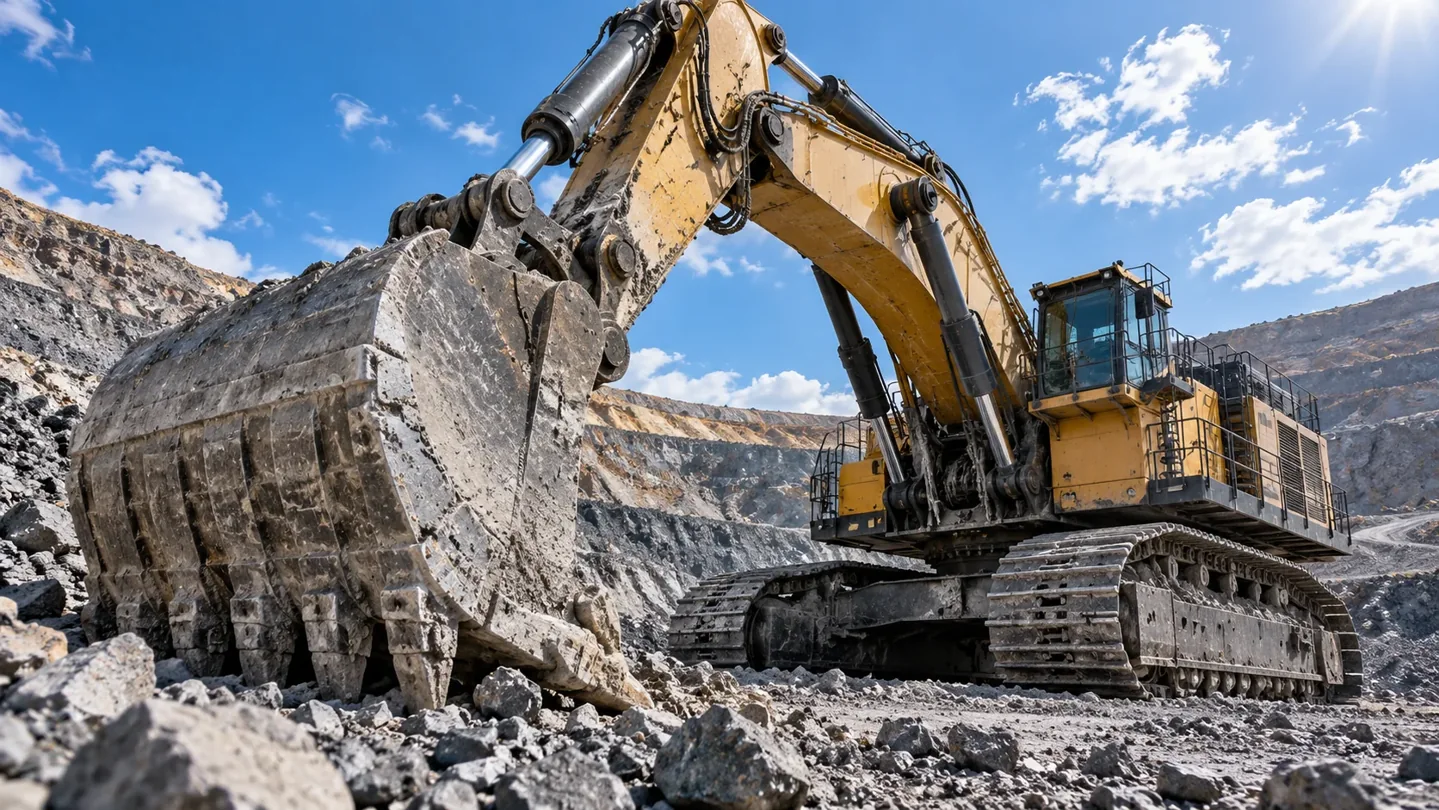
As hydraulic systems became more powerful and reliable during the twentieth century, excavators evolved from relatively mobile earthmoving machines into major production equipment for surface mining. Unlike a large rope shovel, whose design favors sustained, repetitive loading from a prepared face, a hydraulic excavator provides a different kind of flexibility. It can reposition its bucket through multiple controlled movements, trim a face, clean a bench, and work where selectivity matters as much as bulk volume.
Today, modern machines provide detailed information about hydraulic pressures, temperatures, machine motion, fuel or electric power, and digging cycles. Position guidance and digital mine models can help operators understand where they are digging relative to ore boundaries. Cameras and machine vision may assist truck positioning or hazard recognition, while maintenance models seek warning signs of pump wear, contamination, or mechanical fatigue. These are aids to a complex human-led extraction operation, not a guarantee of fully autonomous excavation.
For city readers, the relevant story is how much raw material is hidden inside everyday urban technologies. Railway systems, structural steel, transformers, cables, and electronics depend on minerals extracted and processed far from the finished city. Yet no specific mining excavator is necessarily digging copper, lithium, or any one commodity: the material depends on the operation. A responsible account also acknowledges land disturbance, water consumption, dust, energy use, rehabilitation, and the position of nearby communities.
Future excavators may become more energy efficient, more precise about ore boundaries, and easier to supervise remotely. Better coordination with haul fleets and mineral-processing plants could reduce unnecessary handling. However, lower-impact urban supply chains will also require reuse, recycling, better material design, and transparent sourcing, not only cleverer mining machines.
How the system fits together
Hydraulic digging
Pumps deliver high-pressure fluid to actuators that move the boom, arm, bucket, swing, and undercarriage.
Mine geometry and ore control
Survey models, geologists, operators, and dispatch systems guide excavation location and destination.
Maintenance and safety
Condition sensors support maintenance planning; operators and mine personnel control access and manage unstable ground and equipment hazards.
- 01
Hydraulic digging
- 02
Mine geometry and ore control
- 03
Maintenance and safety
Why cities should care
- Bulk and critical minerals support smart-grid components, electric mobility, buildings, and data infrastructure.
- Selective extraction can reduce misdirected processing and material waste in some mining contexts.
- Large hydraulic equipment offers a vivid example of IoT-enabled condition monitoring.
- City sustainability claims should incorporate upstream sourcing and lifecycle impacts.
Data and AI applications
- Bucket guidance and excavation-zone comparison with mine plans
- Detection of hydraulic faults and component wear
- Vision-assisted machine surroundings and truck positioning
- Cycle analysis, energy efficiency, and material movement estimates
Example in practice
At a hard-rock mine, geologists mark ore zones and an excavator operator uses digital guidance to avoid mixing material unnecessarily. Processed minerals may later become components of power or communications infrastructure. Illustrative workflow, not an identified deployment.
What Are the Benefits and Limitations?
The applications above describe what a system may support. Actual benefits depend on the operating context and should be measured against a clear baseline.
Limits and risks
- High fuel or power demand and complex maintenance of hydraulic systems
- Ore boundaries, unexpected ground conditions, and dust limit the reliability of automated decisions
- Safety risks around mine benches, traffic, and large suspended loads
- Environmental impacts extend well beyond the efficiency of the machine
Sources & References
Related infrastructure machines and robotics
- Tunnel boring machines for urban infrastructure
- Bulldozers and intelligent earthmoving
- Motor graders and precision road construction
- Wheel loaders in urban infrastructure work
- Autonomous mobile robots for urban facilities
- Industrial robot arms and infrastructure fabrication
- Ultra-class mining haul trucks: moving the materials behind cities
- Electric rope shovels: supplying the materials of modern cities
- Dragline excavators: the giant machines behind resource extraction