Background and Further Context
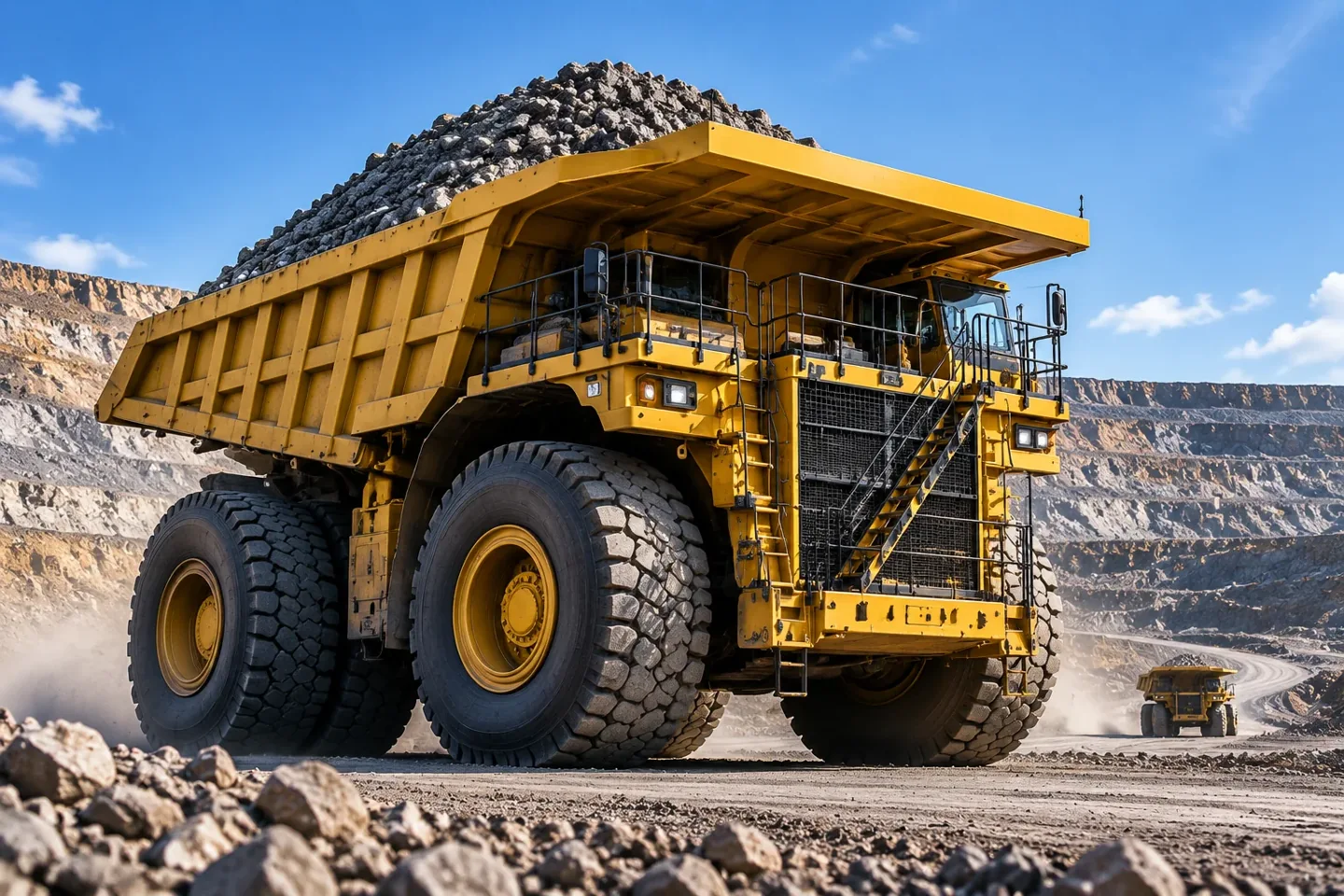
Mining once moved broken rock with railcars, small trucks, and armies of workers. As surface mines expanded during the twentieth century, purpose-built off-highway trucks grew rapidly in payload, engine power, and structural strength. Large tires, heavy-duty braking, and diesel-electric drivetrains allowed them to carry material between digging faces, crushers, stockpiles, and waste dumps. The size of today's machines reflects the economics of very large mines: moving more rock per trip can reduce the labor and logistical burden per ton, provided loading equipment and road infrastructure keep pace.
The connection to cities is indirect but important. Copper may end up in substation transformers and electric-vehicle chargers; iron ore may become reinforcing steel or transit rails. The truck does not extract or refine those materials itself, and a particular truck photograph does not tell us which commodity a mine produces. Yet its productivity affects the upstream supply chain on which infrastructure projects depend.
The hardest limitations are energy use, tire and equipment wear, dust, road safety, and the environmental footprint of mining. Alternative powertrains, trolley-assist systems, battery technologies, automated dispatch, and better maintenance analytics may reduce some impacts. They will not eliminate habitat disturbance, tailings, water demand, or the need for responsible sourcing and material recycling. For a smart city, the question is not simply whether the mining fleet is intelligent; it is whether its materials are produced responsibly and used efficiently.
How the system fits together
Loading and hauling
A shovel or excavator loads the truck. Dispatch software matches truck capacity and arrival times to loading equipment, crushers, and dumps.
Guidance and control
Operators or supervised autonomous systems manage speed, positioning, route assignments, obstacles, and safety zones; mine roads are continuously maintained.
Fleet health
Vehicle telemetry tracks payload, braking, powertrain temperatures, tire condition, fuel or electricity consumption, and equipment faults.
- 01
Loading and hauling
- 02
Guidance and control
- 03
Fleet health
Why cities should care
- Copper, iron, and other mined materials become grid equipment, structural steel, rail systems, and electronics.
- Reliable raw-material supply influences infrastructure cost and construction schedules.
- Autonomous haulage demonstrates what automated vehicles can achieve in controlled, geo-fenced environments.
- Cities' procurement choices can support responsible minerals supply chains, reduced material waste, and recycling.
Data and AI applications
- Autonomous fleet coordination and traffic management within mine boundaries
- Payload distribution, road-condition monitoring, and vehicle health forecasting
- Tire wear, energy use, and haul-cycle optimization
- Safety analytics and supervised recovery of stopped equipment
Example in practice
A copper mine dispatches large haul trucks between a shovel and a crusher. Sensor and route data identify unnecessary queuing and hazardous road sections. Refined copper from the broader supply chain may eventually be used in urban electric grids. This is an illustrative supply-chain example, not a claim about a specific photographed mine.
What Are the Benefits and Limitations?
The applications above describe what a system may support. Actual benefits depend on the operating context and should be measured against a clear baseline.
Limits and risks
- High capital expenditure, large tires, steep roads, and heavy energy requirements
- Autonomous operation needs strict site controls and failsafe procedures
- Mining can cause significant land, water, air-quality, and community impacts
- Increased production is not automatically evidence of more sustainable material use
Sources & References
Related infrastructure machines and robotics
- Tunnel boring machines for urban infrastructure
- Bulldozers and intelligent earthmoving
- Motor graders and precision road construction
- Wheel loaders in urban infrastructure work
- Autonomous mobile robots for urban facilities
- Industrial robot arms and infrastructure fabrication
- Electric rope shovels: supplying the materials of modern cities
- Hydraulic mining excavators and the urban materials supply chain
- Dragline excavators: the giant machines behind resource extraction