Background and Further Context
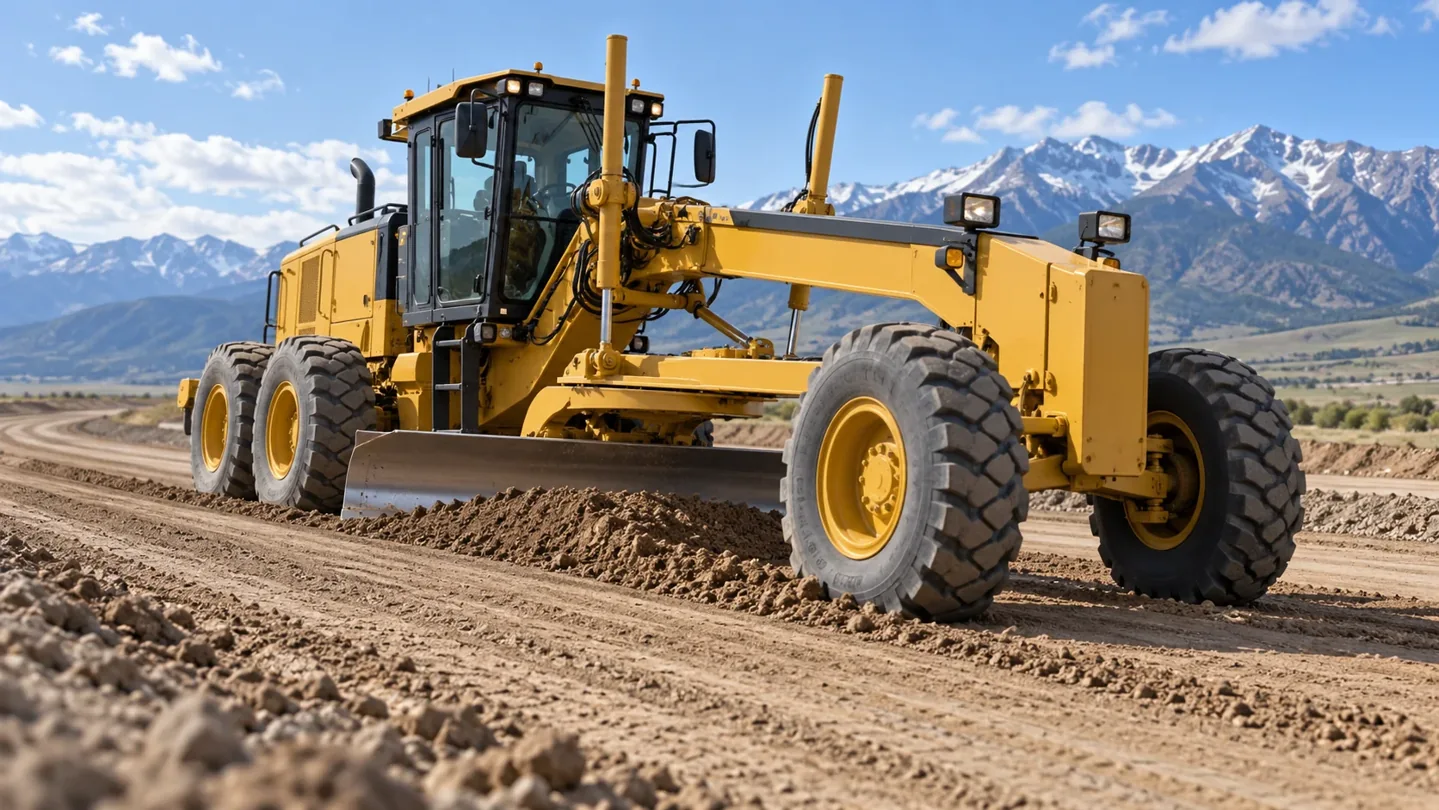
Grading began with dragged blades that leveled earth roads. Self-propelled machines expanded roadbuilding capacity in the early twentieth century, when growing highway networks demanded more consistent surfaces and drainage. Articulated frames, powered blade adjustments, and improved hydraulics made it easier to shape complex road geometry. Digital positioning and grade-control systems later connected the machine directly to engineering survey data.
Today, skilled operators still make many judgments about soil, material distribution, safe movement, and the best sequence of passes. Electronic cross-slope control can maintain a specified angle, while more advanced systems compare the blade with a three-dimensional design. These tools can reduce repeated survey stakes and improve consistency, especially on long road corridors. Yet not every municipality needs the most sophisticated package: low-volume roads and routine maintenance may be better served by conventional grading and careful inspection.
The future points toward more integrated construction records. Graders may help update as-built surfaces, detect rough or poorly drained sections, and share progress with survey and fleet systems. Autonomy is technically possible in controlled areas but harder around live traffic, pedestrians, parked vehicles, and utility work. The benefit for cities should be measured through fewer drainage defects, less rework, safer work zones, and more durable roads—not simply the precision displayed on a machine screen.
How the system fits together
Blade and chassis
The long moldboard can lift, tilt, rotate, and shift to cut or redistribute material while the machine follows the work corridor.
Position and design control
Survey models, GNSS where appropriate, and inertial or slope sensors guide the blade relative to intended elevations and cross-sections.
Quality assurance
Field surveys, material testing, compaction checks, and drainage inspection confirm that the resulting surface is fit for its next construction stage.
- 01
Blade and chassis
- 02
Position and design control
- 03
Quality assurance
Where It Is Used
- New road construction and reconstruction
- Road shoulders, access roads, and unpaved road maintenance
- Roadside drainage, ditches, and slope shaping
- Construction staging areas and winter maintenance in suitable regions
Data generated
- Blade position, grade deviation, and cross-slope
- Machine location, passes, fuel consumption, and operating time
- Construction progress and as-built survey measurements
- Maintenance, fault, and surface-quality records
Analytics and AI applications
- Assisted blade control and 3D grade guidance
- Identification of repeated passes and areas needing correction
- Progress estimation against design quantities
- Detection of emerging roughness and drainage trouble when suitably instrumented
Example in practice
During reconstruction of a city arterial, the grader follows a digital cross-slope design. Surveyors inspect the finished base before paving begins, paying particular attention to drains and intersections. The operator corrects low spots that could otherwise cause ponding. This is an illustrative workflow, not a claimed deployment.
What Are the Benefits and Limitations?
The applications above describe what a system may support. Actual benefits depend on the operating context and should be measured against a clear baseline.
Limits and risks
- Machine guidance quality depends on the design, positioning, and calibration.
- Dense urban work zones may obscure satellites and constrain maneuvering.
- Soil and aggregate behavior varies with moisture and compaction.
- Working near traffic and pedestrians requires effective physical safety controls.
Design considerations
Coordinate the digital surface with utility covers, drainage inlets, intersections, accessible crossings, and field tolerances. Maintain survey controls and verify machine guidance independently where consequences are significant.
Sources & References
Related infrastructure machines and robotics
- Tunnel boring machines for urban infrastructure
- Bulldozers and intelligent earthmoving
- Wheel loaders in urban infrastructure work
- Autonomous mobile robots for urban facilities
- Industrial robot arms and infrastructure fabrication
- Ultra-class mining haul trucks: moving the materials behind cities
- Electric rope shovels: supplying the materials of modern cities
- Hydraulic mining excavators and the urban materials supply chain
- Dragline excavators: the giant machines behind resource extraction