Background and Further Context
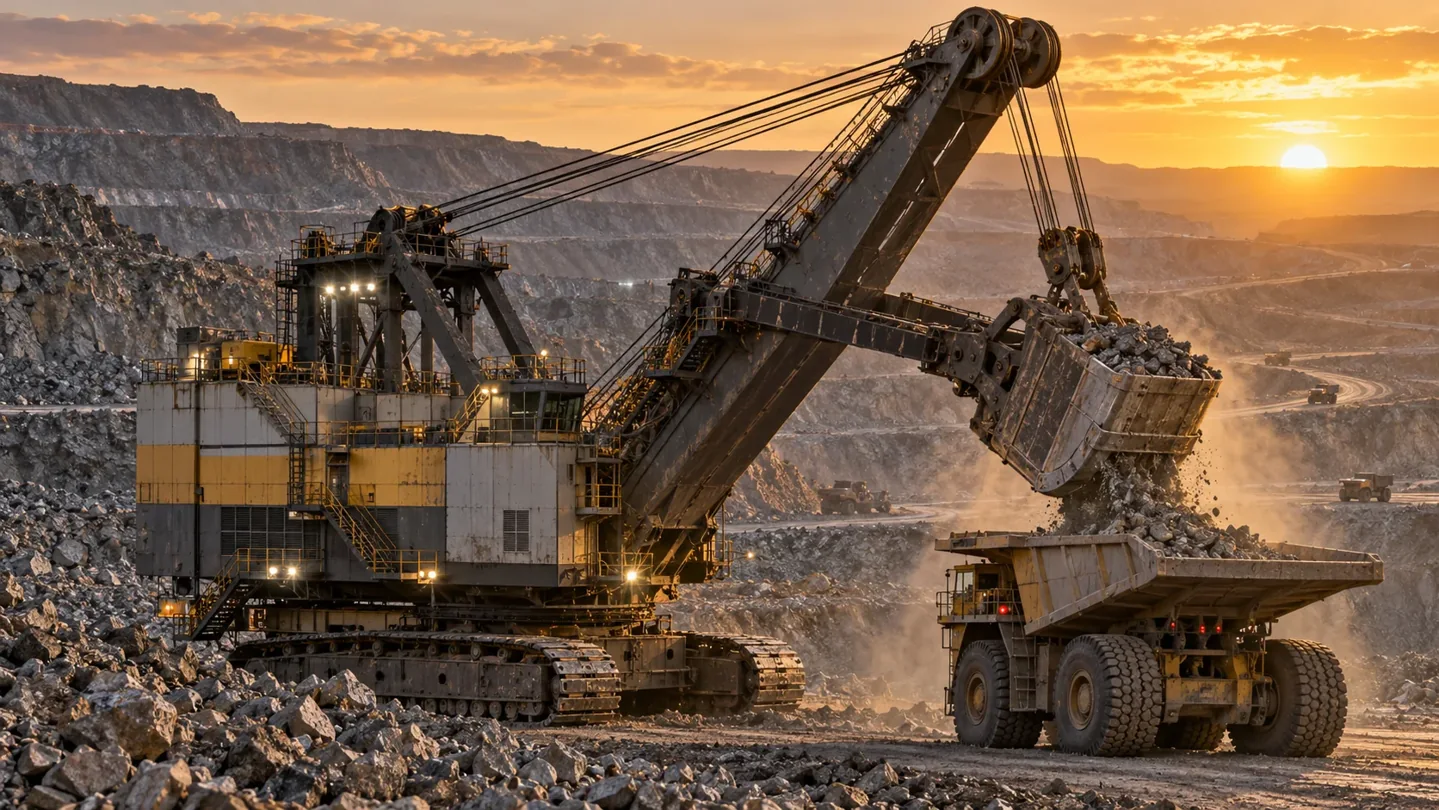
Steam shovels transformed excavation in the nineteenth century and were followed by large electrically powered mining shovels as industrial mines grew. Rather than digging and carrying material over long distances, a rope shovel specializes in one repeated task: fill its bucket, lift and swing it, release the load into a waiting truck, and begin again. Electric motors and an external power connection allow the largest machines to sustain high loading rates without burning diesel onboard.
Modern shovels combine sophisticated power drives with telemetry on motor currents, torque, vibration, temperature, structural strain, and digging cycles. Automation assists operators with movement limits, anti-collision functions, and loading consistency. AI may help forecast maintenance and recognize unusual digging conditions, but high-consequence decisions still require trained people, mine planning, and site-specific safety controls.
These machines make the upstream connection between physical industry and digital cities tangible. The copper in an urban distribution cable or the steel in a bridge begins in mineral processing chains that may include heavy electric excavation. But the equipment should not be portrayed as inherently sustainable. It needs substantial electricity, causes ground disturbance as part of the mining process, and is tied to the broader impacts of the operation. Cleaner power, more efficient loading, longer component life, and improved recycling can change that equation; none removes the need to evaluate water, ecosystems, waste, labor, and local communities.
The next decade is likely to bring smarter excavation guidance, predictive maintenance, tighter coordination with autonomous haul fleets, and energy-aware loading. The most useful innovations will increase safe productivity while reducing downtime and environmental impact—not merely produce ever-larger shovels.
How the system fits together
Digging mechanisms
A crowd mechanism drives a rigid dipper into fragmented rock; electric hoist and swing systems lift and move it toward a truck.
Mine power system
High-voltage electrical infrastructure supplies the shovel through a managed trailing cable; the availability of that supply affects operations.
Coordinated loading
Shovel operators, truck dispatch, ore-control teams, and maintenance staff keep the loading face productive and safe.
- 01
Digging mechanisms
- 02
Mine power system
- 03
Coordinated loading
Why cities should care
- Metal-intensive infrastructure depends on reliable upstream extraction and processing.
- Electrification reduces direct onboard combustion but shifts attention to the source and reliability of mine electricity.
- Predictive maintenance and machine controls illustrate industrial digitalization at enormous scale.
- Sustainable urban procurement must consider sourcing and recycling, not just final product efficiency.
Data and AI applications
- Hoist, swing, crowd, and motor condition monitoring
- Bucket-fill and fragmentation analysis where suitable sensors exist
- Predictive maintenance for ropes, drives, structural components, and bearings
- Shovel-truck matching and mine-production optimization
Example in practice
An iron-ore mine tracks shovel loading cycles to reduce idle truck time. The extracted ore enters processing and manufacturing pathways that may ultimately supply structural steel. Illustrative example; it does not identify a specific mine or imply direct shipment to a particular city.
What Are the Benefits and Limitations?
The applications above describe what a system may support. Actual benefits depend on the operating context and should be measured against a clear baseline.
Limits and risks
- High infrastructure and maintenance demands; limited mobility compared with hydraulic excavators
- Safety hazards from enormous moving structures, trucks, and high-voltage equipment
- Dependent on mining impacts and ore-processing supply chains
- AI-assisted control cannot eliminate operator accountability or geological uncertainty
Sources & References
Related infrastructure machines and robotics
- Tunnel boring machines for urban infrastructure
- Bulldozers and intelligent earthmoving
- Motor graders and precision road construction
- Wheel loaders in urban infrastructure work
- Autonomous mobile robots for urban facilities
- Industrial robot arms and infrastructure fabrication
- Ultra-class mining haul trucks: moving the materials behind cities
- Hydraulic mining excavators and the urban materials supply chain
- Dragline excavators: the giant machines behind resource extraction